Category: books

  • Loving Vincent

    Loving Vincent

    The title was inspired/taken from the 2017 Oscar-nominated film Loving Vincent, which explores the cause of Dutch painter Vincent van Gogh’s death (sorry to start with a dark note). Loving Vincent is the world’s first fully painted feature film. Yes! PAINTED. I didn’t know much about Vincent van Gogh before watching the film, but in just 95 minutes I fell in love with the artist. In 2018, another great film about Vincent van Gogh was made: At Eternity’s Gate starring Willem Dafoe. Dafoe received an Oscar nomination for Best Actor for his portrayal of Vincent in the film. The film isn’t spectacular just because of Willem Dafoe’s performance; it is the true definition of the drama film genre because I think it can make anyone emotional to see Vincent’s pain, especially when portrayed by a great actor like Willem Dafoe.

    Because of both films, I became interested in Vincent van Gogh’s work, his life, and in the process of learning about the latter, I started to feel for him the same way one would feel for a friend. I became curious and I wanted to see his art, and not through my tiny screen. I wanted to see the brush strokes and whatnot.
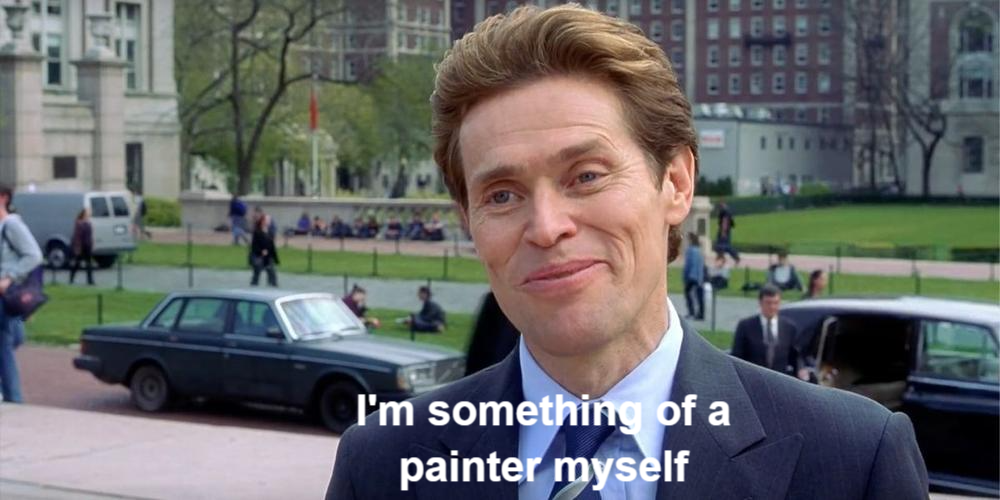
    For anyone who doesn’t know, this is Willem Dafoe. The meme originates from Spiderman (2002)

    So when I visited Amsterdam in February 2020 (just before the pandemic hit), a trip to the Van Gogh Museum was at the top of the list of things to do. For anyone wondering, entry was quite easy (I guess it wasn’t peak tourism season): I bought the ticket using a machine outside the museum and stayed in line for 5 minutes. There is quite a lot to see in the museum, and a small shop where you can get all the van Gogh goodies; DVDs of both films (if I remember correctly, if not then it was just one of the films I mentioned above), memoirs, children’s books, postcards, and letter collections.

    I remembered this when the cashier at the Van Gogh Museum handed me the book I was buying, A Memoir of Vincent van Gogh by Jo van Gogh (his sister-in-law who was married to Theo van Gogh). She told me how Jo is to be credited for making Vincent a world-famous painter after his death. After Vincent’s death and his brother Theo’s death six months after, Jo worked hard to sell Vincent’s paintings, and that’s how The Starry Night painting ended up in the Museum of Modern Art in New York City much to my dismay because I really thought I would get to see it in Amsterdam (insert clown emoji).

    From the films and the memoir I can say that Vincent had some form of severe depression, which made life very difficult for him. The man cut off his own ear! He was also unlucky when it came to love. It just didn’t work for him and I hate to believe that that was simply how it was to happen for someone like him. Instead, I tell myself that Vincent only met the wrong people and should he have lived longer, he would’ve found someone who understood him and his fears; someone who would’ve loved him just the way he was: a “failed” painter. Anyway, I don’t want to write much about his life: please read the memoir or watch the films if you’re interested, or have a look at his Wikipedia page and countless of other sources available on the internet.

    As always, I pay attention to lines I like in every book I read. So here’s a compilation of my favorite quotes from A Memoir of Vincent van Gogh by Jo van Gogh.

    “You think that he is something more than an ordinary human being, but I think it would be much better if he thought himself just an ordinary being.” (written to Theo to describe Vincent)

    “At last he had found his work, and his mental equilibrium was restored; he no longer doubted himself, and however difficult or hard his life became, the inner serenity, the conviction of having found his own calling, never deserted him again.” (Jo, about a moment in Vincent’s life)

    “Deep in his heart there was such a great longing for sympathy, for kindness and friendship, and though his difficult character generally prevented him from finding this and left him isolated in life, yet he always kept longing for somebody with whom he could live and work.” (Jo)

    “Bad connections often arise from a feeling of loneliness, of dissatisfaction.” (words from his father to Vincent)

    “It is … so painful for me to speak to people. I am not afraid of it, but I know I make an unfavorable impression.” (Vincent himself)

    “And he expressed openly how different his life would have been without his disappointment in love.” (Jo)

    “Vincent was not satisfied with all the kindness and craved a deeper understanding of his innermost self than his parents could give, however much they tried.” (Jo)

    “Would you believe it … I should be happy to give ten years of my life if I could go on sitting here in front of this picture for a fortnight, with only a crust of dry bread for food?” (Vincent talking about Rembrandt’s painting Jewish Bride, which he saw at the Rijksmuseum)

    “Every week something new is a great pleasure to him [Vincent]”

    “It is a good thing to be deep in the snow in the winter; in autumn, deep in the yellow leaves, in summer, amid the ripe wheat; in spring, in the grass … always with the mowers and the peasant girls, with a big sky overhead in summer; by the fireside in winter, and to feel that it has always been so and always will be.” (Vincent)

    “I have a terrible lucidity at moments, these days when nature is so beautiful, I am not conscious of myself any more, and the picture comes to me as in a dream.” (Vincent)

    “It pains me not to be able to do anything for him, but for uncommon people, uncommon remedies are necessary, and I hope these will be found where ordinary people would not look them.” (Theo in a letter about Vincent, to Jo)

    “Love of art is not exact; one must call it faith – a faith that maketh martyrs!” (Paul Gachet to Theo about Vincent’s love for art, shortly after Vincent’s death. Gachet was Vincent’s physician during his final days)

    “One of his last words was, ‘I wish I could pass away like this’, and his wish was fulfilled. A few moments and all was over. He had found the rest he could not find on earth…” (Theo in a letter to Jo, after Vincent’s death)

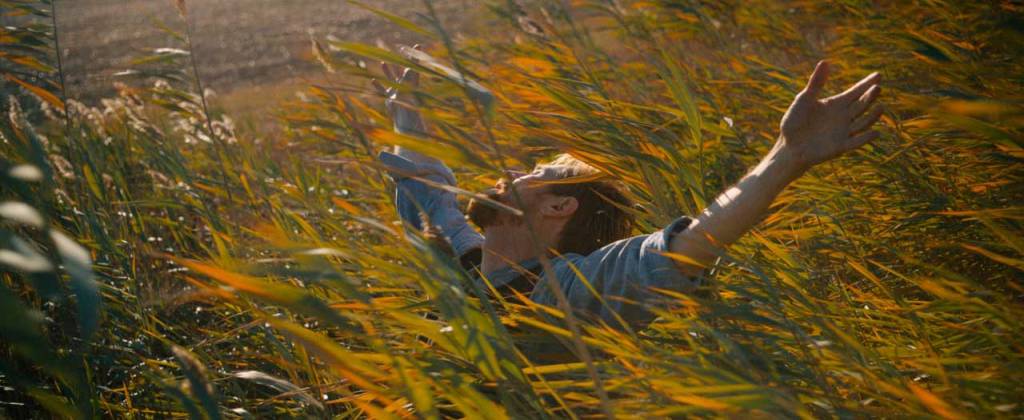
    In the memoir, Jo describes a change in Vincent’s work during his last year. She writes, “It was no longer the bouyant, sunny, triumphant work of Arles. There sounded a deeper, sadder tone than the piercing clarion of his symphonies of yellow during the previous year: his palette had become more sober, the harmonies of his pictures had passed into a minor key.” This reminds me of the film At Eternity’s Gate, which uses the “symphonies of yellow” in certain parts, and sometimes, a lot of yellow, like when Vincent is seemingly happy as in the featured image of this article.

    I’ll end this with a quote from At Eternity’s Gate describes the journey that Vincent’s work has taken in the period of 100 plus years:

    Maybe God made me a painter for people who aren’t born yet.

    Vincent Van Gogh (At Eternity’s Gate, 2018)
  • Rethinking John Green

    I spend my days in sketchy corners of Twitter and YouTube where I get triggered to write about topics that probably no one cares about. But it’s fun so here we are.

    “To weird”, he said.

    “To weird,” we clinked cans and sipped

    Turtles All the Way Down, John Green

    I read a tweet about a year ago (now deleted) about how similar John Green novels are. I felt so embarrassed because when I was 17 John Green was the Peter Van Houten to my Hazel Grace Lancaster, pre-Amsterdam trip. I once borrowed four, yes 4, John Green novels from my high school library. Paper Towns, An Abundance of Katherines, Will Grayson, Will Grayson, and The Fault In Our Stars. I read all except Will Grayson, Will Grayson because I couldn’t keep up with the weird two-author format. Years later I read Looking for Alaska and Turtles All The Way Down. It’s been nearly two years since I read the most recent one, Turtles All the Way Down and so, I’ve had plenty of time to think about John Green’s works.

    It’s true, they are all very similar. I read the same book multiple times and the only thing I can say to defend myself is that John Green’s books are very, very quotable and I love quotes.

    So let me give a summary of the books, without giving away too much, just for context.

    Looking for Alaska follows a teenage boy (Miles) who seeks a profound meaning/experience in his life. He falls for a girl, Alaska and he tries to understand her.

    Paper Towns follows a teenage boy (Quentin) who is fascinated by a girl, Margo Roth Spiegelman, who is considered to be this cool girl that everyone wants to be or be friends with.

    An Abundance of Katherines follows a teenage boy (Colin) trying to be a genius by attempting to discover something. So he comes up with a formula that predicts how long his relationships with girls named Katherine lasts (he’s dated like 20 of them…).

    The Fault In Our Stars is the most known John Green book. It’s about a teenage girl with cancer who falls for a teenage boy who also had/has cancer and is dying. They bond over their love for a novel called An Imperial Affliction by Peter Van Houten.

    Turtles All the Way Down. For a while, maybe two years, this was my favorite book. In this book, John Green writes about Aza Holmes, a teenager with obsessive-compulsive disorder (OCD).

    Similar plotlines

    When reading Looking for Alaska and Paper Towns I got the impression that life is about chasing something great, unusual, and perhaps even unreachable. Both Miles and Quentin are trying to find a girl (Alaska and Margo). John Green starts both stories with a Tumblresque quote signaling the story’s direction. The “signal quote” is placed somewhere in the first few pages.

    “The way I figure it, everyone gets a miracle…But my miracle was different. My miracle was this: out of all the subdivisions in all of Florida, Indeed up living next door to Margo Roth Spiegelman.” (Quentin, Paper Towns)

    “So this guy, François Rabelais. He was this poet. And his last words were, ‘I go to seek a Great Perhaps.’ That’s why I’m going. So I don’t have to wait until I die to start seeking a Great Perhaps.” (Miles/Pudge, Looking for Alaska)

    It comes to no surprise that both stories are centered around a girl. The thing about Alaska and Margo is that they are very, very similar. Popularity, beauty and quirky habits are characters that both have. On the other hand, Miles and Quentin are generally irrelevant in their schools. They’re nobodys who want to save themselves from their situations and think that this girl(s) is the Great Perhaps, the Miracle, the answer, etc.

    John Green writes things like, “If people were rain, I was drizzle and she was a hurricane.” (Miles/Pudge, Looking for Alaska). Drizzle wishes it was always followed by a hurricane so that it could mean something in the world precipitation. Instead, it’s just drizzle. Even the Weather app doesn’t pick it up sometimes. It wants to be seen and to mean something and so it seeks its hurricane; its great perhaps. Do you see the problem with this?

    It ties into the whole discussion about Manic Pixie Dream Girls in literature, mostly film and TV. Basically, a MPDG is a free-spirited character (female) with a peculiar background or habits that draw the (usually male) protagonist towards them. The male protagonist is always in love with the MPDG and she exists to teach the protagonist some grand lesson. Alaska is there to show Miles that life shouldn’t be taken so seriously. She says cringey things like “Y’all smoke to enjoy it. I smoke to die.” Look, I get it. Teenagers have mental illnesses that push them to make questionable life choices. We’ve all been there. But this line…really, John? Oh and just before that, he writes, “She looked at me and smiled widely, and such a wide smile on her narrow face might have looked goofy were it not for the unimpeachably elegant green in her eyes. She smiled with all the delight of a kid on Christmas morning…” Really? The problem here is that it’s not just one or two sentences. It’s the whole book. You find parts like these describing the MPDG (Alaska or Margo). In another part he writes, “…she (Alaska) was beautiful. In the dark beside me, she smelled of sweat and sunshine and vanilla.” Yes, sweat. It’s almost as if these protagonists have literally nothing going on for themselves and that is why their stories center around these MPDGs.

    Let’s look at Paper Towns and how Quentin actually spent days searching for clues about where Margo is and then he goes on a road trip to find Margo who had ran away from home just before the end of high school. The same Margo who he barely hung out with. She had her own social life with friends and a boyfriend, until he cheated on her, and then she suddenly shows up at Quentin’s window asking for help in her immature middle-of-the-night revenge scheme as if the entire 9 years where they barely talked hadn’t happened. Regardless, Quentin felt that he needed to do what he did. The entire book is him trying to figure out where she went and then actually dragging his friends on a long road trip from Florida to New York. But what does Quentin have outside of his Margo obsession? Nothing. She’s his “miracle” and the strangest thing is that we barely learn anything about her in the book. She’s only there to reveal to him that paper towns like theirs only look good from the outside. “…everything’s uglier up close”. I guess she’s there to make sense of the book’s title. Even though the book is mostly about her and paper towns get mentioned very few times.

    Characters of color

    This is a touchy topic. Personally I don’t care if a book lacks diversity among its characters, especially if it’s set in what can be assumed to be a predominantly white society. I do, however, think it’s ridiculous to include non-white characters for shallow comedic plotlines. This is a common feature in John Green’s books.

    In An Abundance of Katherines you have Hassan who is of Arab origin, in Paper Towns Marcus is black and Daisy Ramirez is obviously latina, in Turtles All the Way Down.

    Hassan serves as Colin’s sidekick in An Abundance of Katherines, he’s written in a way that doesn’t make you care much about him even though he’s always there. I can’t even remember anything significant about him other than something to do with baguettes. In Paper Towns, Quentin mistakenly buys a confederate flag T-shirt for Marcus while on their road trip to New York, and it’s all resolved as a small funny mistake. Also it is mentioned somewhere (or maybe multiple places) in the book that Marcus’ parents own a large collection of black Santas. I know: what? In Turtles All the Way Down, Daisy says things like, “I have the soul of a private jet owner, and the life of a public transportation rider”, and in reference to being asked why she used past tense in a conversation about Star Wars, she says, “Because all of this happened a long time ago in a galaxy far, far away, Holmesy. You always use the past tense when talking about Star Wars. Duh.” I love Star Wars, but this is a bit cringey.

    After reading Turtles All the Way Down I realized that Aza is just a female version of Colin from An Abundance of Katherines. She and him are seemingly calm and sensible in comparison to their best friends, i.e. Daisy and Hassan, who tend to be very out there with this and that. Like Hassan, Daisy comes off as a rebel who is there to bend societal codes of conduct in order to get what she wants. Hassan is self-proclaimed slacker, whereas Daisy convinces Aza to participate in her plan to win a reward for information about the fugitive billionaire, Mr. Picket, and she uses Aza’s connection to Mr. Picket’s son, Davis, to do that.

    Again, pointless plotlines that make them come off as ridiculous characters in comparison to the protagonists, and, as a matter of fact, every other character.

    The writing

    If you’re a regular here (thanks by the way), you might’ve noticed that I tend to use a lot of John Green quotes in my writing. There’s here, here, here and here.

    I love John Green’s quotes, I won’t lie. However, it comes off as if his books are repetitive pop albums where every song was carefully crafted to be on the Billboard Hot 100. I don’t read much, but I’ve read enough to see that John Green’s novels have an unusually high number of quotable lines. I mean, I even wrote this. It’s almost like he knows there’s a niche for his words somewhere on the internet: Tumblr. There’s an attempt to be profound and interesting, but it has been done so many times throughout his writing career that it has gotten old and boring.

    Quotes like “I go to seek a great perhaps” and “everyone gets a miracle” make it seem like there’s something more to life than what we have right now. I don’t know about others, but when I read most of these books between the ages 17 and 20, I found myself wishing I could escape to an unknown place or that I could find someone to help me escape the little labyrinth that I felt I was living in. That stopped me from living in the moment and I spent my days in my room dreaming of what couldn’t be. Frankly, I’m tired of running away from places and as I figured last year, the only miracle I get in life is being able to do what I can do; the daily mundane tasks and not-so-mundane ones like writing that allow me to grow. Really, life is that simple; a complete opposite of what a John Green quote/book will try to tell you.

    I think John Green is smart in the way he uses words. I love that. He makes me feel things when I read his works, depending on the situation I’m in. I remember saying “pain demands to be felt” to myself over and over, back in my teenage depression days. That quote still gets me through things. But as a novelist, I know now that he is basic. There isn’t much to think about when you read most of his books. The plots tend to be shallow, especially considering how some of these stories focus on the protagonist’s female love interests who we don’t learn anything significant about. Despite the quotes and the very vivid descriptions of physical beauty, Margo and Alaska are still two very mysterious and unknown people.

    The Fault In Our Stars was John Green’s best work. It has its flaws (kissing in the Anne Frank House???), but is different from the rest. TFIOS is just two people who are uniquely compatible and they fall in love despite both of their lives literally hanging by a thread. No one is seeking the other to find themselves. Each is a whole person wanting to love someone else. Very matured when compared to the likes of Colin, Miles and Quentin whose entire personalities are based on finding/understanding girls who each think is his better half. The most impressive thing in TFIOS, to me, is Augustus’ character development where he later understands that he is not a nobody after all. Someone cares about him and even though it isn’t a hurricane of people building monuments and naming streets after him, the terminally ill drizzle that admires him is still precipitation and that’s all that matters.

  • Here’s the Breakfast Menu at Tiffany’s

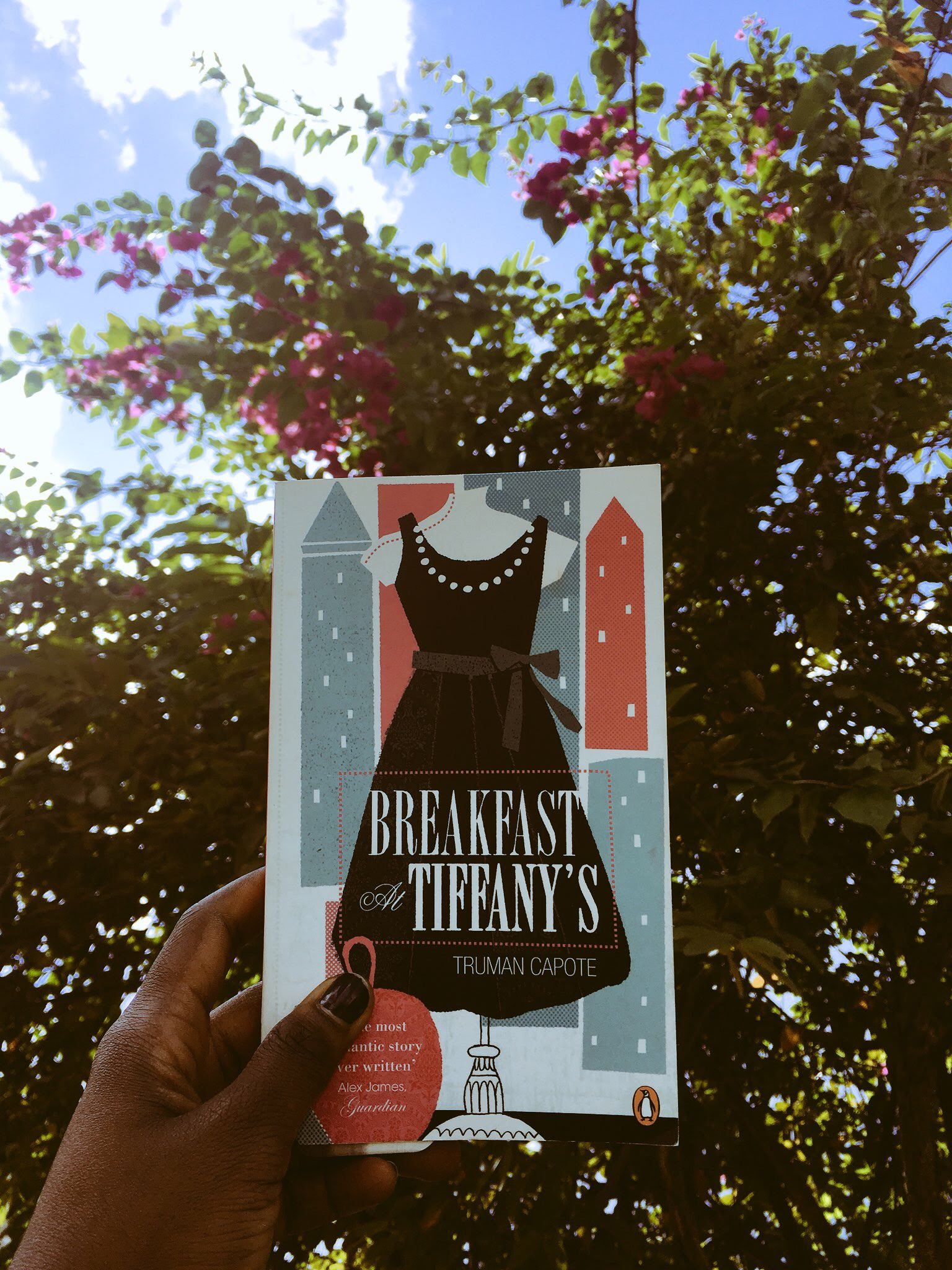
    I have admired big cities for a long time, mainly because I come from a big city myself, sort of. I actually grew up in a large suburban town in Dar es Salaam, the largest city in East Africa, but during the few weekend nights I found myself in the city I would carefully stare at all the people, the chaos and the colorful billboards. Everything made me admire the city and to this day I tell myself that I shall one day live in a big city. My love for big cities grew during my high school days when I had to pass through the city each morning and afternoon. I could make a list and mention other things including Taylor Swift’s Welcome to New York, Owl City’s New York City and basically every DC or Marvel superhero movie ever created that paints the big city as this place where all the action happens. And to be very honest, all the action does happen in the big cities. You have to go and make it happen. Breakfast At Tiffany’s by Truman Capote is just one of many artistic works that prove this.

    Miss Holiday ‘Holly’ Golightly is a young New Yorker who makes me say ‘go get it!’ to myself. In Owl City’s New York City he sings, “you never know if you never go” and I think to myself that Holly may have had a conversation like this with herself before she moved to New York. Even though what she “achieved” is not really what many of us think of achieving in this day and age, the fact that she went and became someone (being a “nobody” before) in a big city is enough. Holly, who is the central character, is a controversial one because of her occasional racist remarks that immediately prompted me to cheer when the black police officer slapped her after she said, “Get them cotton-pickin’ hands off of me, you dreary, drivelling old bull-dyke.” We can go around saying it was a different era, but the truth is that Holly is what we call the b-word today. I do, however, admire how she created herself. To me, changing one’s name goes beyond the legal process, which is why I am always interested in those ‘change my name and move to a different city’ jokes in movies and TV. If you do plan on doing it, I recommend you follow Holly’s example, have Holly’s breakfast menu.

    IMG_9403

    Holly knows what she wants and she goes after it even when the odds seem to not be in her favor. Though not explicitly mentioned in the story, you can see how Holly believes in herself; her beauty, mind and her social skills-she doesn’t have anything else. This reminds me of a conversation about optimism I had with some friends a few days ago. I think this is what they meant because looking at my own life and putting myself in Holly’s position I would have definitely never made it to Rio de Janeiro or Buenos Aires or whatever part of Africa she ended up in if I did not have the optimism she had. Young and with an unshakable lust for life, Holly is what we all wish we were. Some of us have probably given up on that vision because of how our modern society is built and many other factors, but as my high school history teacher used to say, “it’s not the end of the world” and we all know you can have breakfast during any time of the day.

    Anyway, here are some quotes from Breakfast at Tiffany’s that I loved, hoping you love them too:

    They were large eyes, a little blue, a little green, dotted with bits of brown: vari-coloured, like her hair; and, like her hair, they gave out a lively warm light.

    “I can’t get excited by a man until he’s forty two.”

    “You can beat your brains out for her, and she’ll hand you horses**t on a platter.”

    “Even wearing glasses this thick; even when she opens her mouth and you don’t know if she’s a hillbilly or an Okie or what.”

    “I want to still be me when I wake up one fine morning and have breakfast at Tiffany’s.”

    “I don’t want to own anything until I know I’ve found the place where me and things belong together.”

    “I told you: you can make yourself love anybody”

    He’d been put together with care, his brown head and bull-fighter’s figure had an exactness, a perfection, like an apple, an orange, something nature has made just right.

    “I like a man who sees the humor”

    Aprils have never meant much to me, autumns seem that season of beginning, spring; which is how I felt sitting with Holly on the railings of the boathouse porch.

    “Everybody has to feel superior to somebody. But it’s customary to present a little proof before you take the privilege.”

    “I’m not smirking. I’m smiling. You’re the most amazing person.”
    “I suppose I am.”

    “Never love a wild thing, Mr. Bell.”

    “But you can’t give your heart to a wild thing: the more you do, the stronger they get. Until they’re strong enough to run into the woods. Or fly into a tree. Then a taller tree. Then the sky. That’s how you’ll end up, Mr Bell. If you let yourself love a wild thing. You’ll end up looking at the sky.”

    “It’s better to look at the sky than live there. Such an empty place; so vague. Just a country where the thunder goes and things disappear.”

    “I love New York, even though it isn’t mine, the way something has to be, a tree or a street or a house, something, anyway, that belongs to me because I belong to it.”

    So the days, the last days, blow about in memory, hazy, autumnal, all alike as leaves.

    I loved her enough to forget myself, my self-pitying despairs, and be content that something she thought happy was going to happen.

    “A girl doesn’t read this sort of thing without her lipstick.”

    “Anyway, home is where you feel at home. I’m still looking.”

  • The Perks of Reading The Perks of Being A Wallflower

    I remember when I was in high school. I hated every moment of it. I told myself I would try hard to “participate” while in university. And I am trying. Trying.

    In The Perks of Being a Wallflower, Stephen Chbosky shows us how challenging it can be to “participate”, especially when you’re what most people call “weird”. The book is about Charlie. It’s a story about friendship and how powerful and helpful friendships are, especially during the worst of times. It also shows what goes on in the mind of a teenage boy, and I guess every young adult ever. In one incident Charlie asks himself, I don’t know who decided these things. Because I also don’t know who decides things like who’s cool or weird and beauty standards and what music is considered to be “great taste”.

    Written in the form of letters, The Perks of Being a Wallflower almost makes the reader feel as though she/he is Charlie or as if Charlie is a real person and the reader just found his stuff lying around somewhere and decided to have a look. But I strongly believe that Stephen Chbosky wanted it to be that the reader is the ‘friend’ who would “listen and understand”. He writes letters to an unknown “friend” throughout the book; about his joys and sorrows as a high school freshman. I think it’s okay to say that most of us can relate to Charlie’s experiences. For me, high school was tough, especially the last two years and I think university has been too-to some extent, except that there aren’t any adults to order me around now and give me curfews and all that.

    At first, I thought I wouldn’t get as many quotes from the book as I hoped to, but I ended up getting way more than I ever thought I would from any book of similar length. All these quotes have significant meanings, even though here they stand alone. Some are just funny, others are sad and others possess the kind of wisdom a young adult needs in order to get through life. All these meaningful quotes are the ‘perks’ I reference in the heading. They added something in my life and, in some instances, they changed it for the better. I hope they impact you in a good way too.

    I would recommend the book to everyone, not just kids in high school and university. It’s a good read and if you’re into films, you can check out the movie adaptation written and directed by the author himself. It’s a great film!

    Here are 64 quotes from The Perks of Being a Wallflower.

    So, this is my life. And I want you to know that I am both happy and sad and I’m still trying to figure out how that could be.

    Honestly, I don’t like doing dishes.

    I think it’s nice for stars to do interviews to make us think they are just like us, but to tell you the truth, I get the feeling that it’s all a big lie.

    It would be very nice to have a friend again. I would like that even more than a date.

    The thing is some girls think they can actually change guys. And what’s funny is that if they actually did change them, they’d get bored. They’d have no challenge left.

    And I wonder if anyone is really happy. I hope they are. I really hope they are.

    Sometimes people use thought to not participate in life.

    We accept the love we think we deserve.

    I feel infinite.

    You see things, you keep quiet about them. And you understand.

    And in that moment, I swear we were infinite.

    So, I guess Zen is a day like this when you are part of the air and remember things.

    I have decided that maybe I want to write when I grow up. I just don’t know what I would write. (ME TOO)

    I just think it’s bad when a boy looks at a girl and thinks that the way he sees the girl is better than the girl actually is. And I think it’s bad when the most honest way a boy can look at a girl is through a camera.

    I don’t know the significance of this, but I find it very interesting.

    They talk about books and issues and kiss in the rain.

    I always thought it would be fun to have “glory days”. Then, I would have stories to tell my children and golf buddies.

    Maybe these are my glory days, and I’m not even realizing it because they don’t involve a ball.

    Old pictures look very rugged and young, and the people in the photographs always seem a lot happier than you are.

    I just hope I remember to tell my kids that they are as happy as I look in my old photographs. And I hope that they believe me.

    I don’t know if it’s better to have your kids be happy and not go to college. I don’t know if it’s better to be close with your daughter or make sure she has a better life than you do. I just don’t know.

    I hope the people who wrote those songs are happy. I hope that they feel it’s enough. I really do because they’ve made me happy. And I’m only one person.

    “write about me sometime.”
    “I will”

    It was the kind of kiss that I could never tell my friends about out loud. It was the kind of kiss that made me know that I was never so happy in my whole life.

    And I thought that all those little kids are going to grow up someday. And all of those little kids are going to do the things that we do. And they will all kiss someone someday. But for now, sledding is enough. I think it would be great if sledding were always enough, but it isn’t.

    And this one kid Mark at the party who gave me this came out of nowhere and looked at the sky and told me to see the stars. So, I looked up, and we were in this giant dome like a glass snowball, and Mark said that the amazing white stars were really only holes in the black glass of the dome, and when you went to heaven, the glass broke away, and there was nothing but a whole sheet of star white, which is brighter than anything but doesn’t hurt your eyes. It was vast and open and thinly quiet, and I felt so small.

    This one time when it’s peaceful outside, and you’re seeing things move, and you don’t want to, and everyone is asleep. And all the books you’ve read have been read by other people. And all then songs you’ve loved have been heard by other people. And that girl that’s pretty to you is pretty to other people. And you know that if you looked at these facts when you were happy, you would feel great because you are describing “unity”.

    It’s like when you are excited about a girl and you see a couple holding hands, and you feel so happy for them. And other times you see the same couple, and they make you so mad. And all you want is to always feel happy for them because you know that if you do, then it means that you’re happy, too.

    Everyone is always comparing everyone with everyone and because of that, it discredits people.

    It was a movie smile in slow motion, and then everything was okay.

    I decided to do my math homework, which was a mistake because math has never made any sense to me. (ME TOO!)

    “do you guess or do you know?”
    “I guess.”
    “good enough.”

    You should tell her how nice her outfit is because her outfit is her choice whereas her face isn’t.

    Because if you force her to do something she doesn’t want to do, then you’re in big trouble, mister…

    And to tell you the truth I don’t want to be exposed to all these great things if it means that I’ll have to hear Mary Elizabeth talk about all the great things she exposed me to all the time.

    I would give someone a record so they could love the record, not so they would always know that I gave it to them.

    Maybe this is the way things are supposed to be, but it doesn’t feel right.

    My father got a raise, and my mother didn’t because she doesn’t get paid for housework.

    Things get worse before they get better because that’s what my psychiatrist says, but this is a worse that feels too big.

    I look at the teachers and wonder why they’re here. If they like their job. Or us.

    I don’t know how much longer I can keep going without a friend.

    It’s much easier not to know things sometimes. And to have French fries with your mom be enough.

    There’s nothing like the deep breaths after laughing that hard. Nothing in the world like a sore stomach for the right reasons.

    It’s just hard to see a friend hurt this much. Especially when you can’t do anything except “be there”.

    I love that expression. College of my choice. Safety school is another favorite.

    I never even knew she liked movies, but I guess she does. She calls them “films.”

    I think the idea is that every person has to live for his own life and then make the choice to share it with other people. Maybe that is what makes people “participate.”

    And I was happy because they were happy.

    Everything was as good as it could be.

    And I think everyone is special in their own way.

    And there it is. The city. A million lights and buildings and everything seems as exciting as the first time you saw it. It really is a grand entrance.

    Then, we were quiet for the rest of the song. She held me a little closer. I held her a little closer. And we kept dancing. It was the one time all day that I really wanted the clock to stop. And just be there for a long time.

    She wasn’t bitter. She was sad, though. But it was a hopeful kind of sad. The kind of sad that just takes time.

    You can’t just sit there and put everybody’s lives ahead of yours and think that counts as love. You just can’t. you have to do things.

    It’s just that I don’t want to be somebody’s crush. If somebody likes me, I want them to like the real me, not what they think I am. And I don’t want them to carry it around inside. I want them to show me, so I can feel it, too. And if they do something I don’t like, I’ll tell them.

    But right now I’m here with you. And I want to know where you are, what you need, and what you want to do.

    I’m so sorry that I wasted your time because you really do mean a lot to me and I hope you have a very nice life because I really think you deserve it. I really do. I hope you do, too. Okay, then. Goodbye.

    So I guess we are who we are for a lot of reasons. And maybe we’ll never know most of them. But even if we don’t have the power to choose where we come from, we can still choose where we go from there. We can still do things. And we can try to feel okay about them.

    I think that if I ever have kids, and they’re upset, I won’t tell them that people are starving in China or anything like that because it wouldn’t change the fact that they were upset.

    And even if somebody else has it much worse, that doesn’t really change the fact that you have what you have. Good and bad.

    Maybe it’s good to put things in perspective, but sometimes, I think that the only perspective is to really be there.

    Because it’s okay to feel things. And be who you are about them.

    And I just thought how great it was to have friends and a family.