In 2020, Jade Bentil, a Black feminist historian, used the term Wakandafication in a tweet during a wave of online discourse surrounding the trailer of the Disney+ film ‘Black Is King’ (I wrote about this here). She wrote, “The Wakandafication of the continent and Black diasporic identities is entirely uninspired. The repeated tropes/symbolic gestures that homogenize & essentialize thousands of African cultures in service of securing the terrain for Black capitalist possibilities & futures is tired.”
Inspired by Jade Bentil’s tweet, I came to my own explanation of Wakandafication, which slightly deviates from the original. Wakandafication is the selection of desirable fictitious and real African cultural elements and their presentation in mainstream (primarily Western) media as simply ‘African’. Wakandafication perpetuates the misconception of Africa as a homogenous place and capitalizes on the pan-African idea that Africa is or should be one. Looking back, I think there is also a need for me to clarify that pan-Africanism is not simply “Africa is one”, but it is a movement that encourages the unification of African and Afro-descent people, among many other things.
In this post, I want to focus on the meaning of Wakandafication as tweeted by Jade Bentil.
Wakandafication post ‘Black Is King’: Young, Famous & African
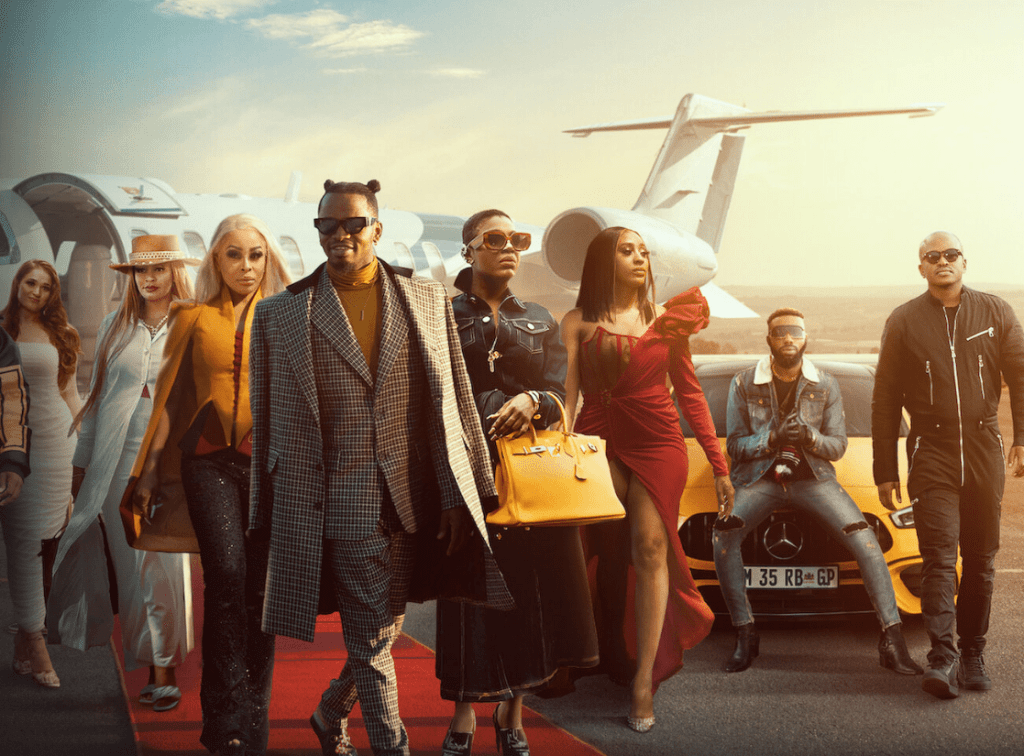
Since my previous essay on the issues in portrayals of African culture in international media there have been newer releases specifically targeted towards black people. In this article I want to focus particularly on the Netflix reality TV show ‘Young, Famous & Africa’, henceforth YFA.
YFA premiered on Netflix in March 2022, with a second season coming out in May 2023. The show follows a group of wealthy African individuals: celebrities, media personalities and businesspeople as they go about their lives in Johannesburg, South Africa. It is important to mention that nearly half of the cast do not live in South Africa full time (and are not of South African origin). Different African countries are represented including South Africa, where the show is filmed, Namibia, Ghana, Nigeria, Tanzania and Uganda.
The show starts with one cast member planning a party. She says, “we’re celebrating the continent because it is our time and we want the world to know that we’re also as ‘first world’, even though they call us the third world.” This party, a “flex night” as she calls it, sets the narrative for the rest of the show.
In both seasons of YFA the viewer is presented with a one-dimensional view of African wealth. Despite coming from different countries, cast members’ display and use of wealth seems rather samey and uninspired: expensive real estate in Johannesburg, lavish parties, boat rides, brunches with no real purpose other than drama, private jets, extravagant (and sometimes impractical) outfits, and Western designer clothing and accessories. It’s considered a negative thing if you can’t keep up. In one scene in season 2, two cast members get into an argument and one accuses the other of wearing fake designer items and not being as rich as she claims.
This fixation on wealth and luxury, as Jade Bentil wrote, is “in service of securing the terrain for Black capitalist possibilities and futures.” The end goal (becoming rich) is idealized to the point that nothing else matters. The how-tos and the daily challenges of making money as an African artist or businesswoman in a deeply patriarchal society are never explored – not even superficially. This is becoming a major flaw in our society that celebrates capitalistic success through net worth lists and Instagram followings without paying too much attention to the means of obtaining such wealth: exploited and underpaid workers (including children) in factories and mines in developing countries, ever-increasing carbon emissions, and tax evasion through loopholes and offshore accounts.
Wakandafication is primarily a media-related term and the concept it explains is likely to continue to dominate Afro-centered media in the near future. Shows like YFA validate black/African capitalistic ambitions among young Africans in the continent and those in the diaspora while simultaneously profiting off African cultures presented in an inauthentic or exaggerated way. While I’m excited about more Africa-focused content in international media, I’m ambivalent about feeding into this type of representation that is likely to have negative consequences in the long run.




 the writing nib