The title was inspired/taken from the 2017 Oscar-nominated film Loving Vincent, which explores the cause of Dutch painter Vincent van Gogh’s death (sorry to start with a dark note). Loving Vincent is the world’s first fully painted feature film. Yes! PAINTED. I didn’t know much about Vincent van Gogh before watching the film, but in just 95 minutes I fell in love with the artist. In 2018, another great film about Vincent van Gogh was made: At Eternity’s Gate starring Willem Dafoe. Dafoe received an Oscar nomination for Best Actor for his portrayal of Vincent in the film. The film isn’t spectacular just because of Willem Dafoe’s performance; it is the true definition of the drama film genre because I think it can make anyone emotional to see Vincent’s pain, especially when portrayed by a great actor like Willem Dafoe.
Because of both films, I became interested in Vincent van Gogh’s work, his life, and in the process of learning about the latter, I started to feel for him the same way one would feel for a friend. I became curious and I wanted to see his art, and not through my tiny screen. I wanted to see the brush strokes and whatnot.
So when I visited Amsterdam in February 2020 (just before the pandemic hit), a trip to the Van Gogh Museum was at the top of the list of things to do. For anyone wondering, entry was quite easy (I guess it wasn’t peak tourism season): I bought the ticket using a machine outside the museum and stayed in line for 5 minutes. There is quite a lot to see in the museum, and a small shop where you can get all the van Gogh goodies; DVDs of both films (if I remember correctly, if not then it was just one of the films I mentioned above), memoirs, children’s books, postcards, and letter collections.
I remembered this when the cashier at the Van Gogh Museum handed me the book I was buying, A Memoir of Vincent van Gogh by Jo van Gogh (his sister-in-law who was married to Theo van Gogh). She told me how Jo is to be credited for making Vincent a world-famous painter after his death. After Vincent’s death and his brother Theo’s death six months after, Jo worked hard to sell Vincent’s paintings, and that’s how The Starry Night painting ended up in the Museum of Modern Art in New York City much to my dismay because I really thought I would get to see it in Amsterdam (insert clown emoji).
From the films and the memoir I can say that Vincent had some form of severe depression, which made life very difficult for him. The man cut off his own ear! He was also unlucky when it came to love. It just didn’t work for him and I hate to believe that that was simply how it was to happen for someone like him. Instead, I tell myself that Vincent only met the wrong people and should he have lived longer, he would’ve found someone who understood him and his fears; someone who would’ve loved him just the way he was: a “failed” painter. Anyway, I don’t want to write much about his life: please read the memoir or watch the films if you’re interested, or have a look at his Wikipedia page and countless of other sources available on the internet.
As always, I pay attention to lines I like in every book I read. So here’s a compilation of my favorite quotes from A Memoir of Vincent van Gogh by Jo van Gogh.
“You think that he is something more than an ordinary human being, but I think it would be much better if he thought himself just an ordinary being.” (written to Theo to describe Vincent)
“At last he had found his work, and his mental equilibrium was restored; he no longer doubted himself, and however difficult or hard his life became, the inner serenity, the conviction of having found his own calling, never deserted him again.” (Jo, about a moment in Vincent’s life)
“Deep in his heart there was such a great longing for sympathy, for kindness and friendship, and though his difficult character generally prevented him from finding this and left him isolated in life, yet he always kept longing for somebody with whom he could live and work.” (Jo)
“Bad connections often arise from a feeling of loneliness, of dissatisfaction.” (words from his father to Vincent)
“It is … so painful for me to speak to people. I am not afraid of it, but I know I make an unfavorable impression.” (Vincent himself)
“And he expressed openly how different his life would have been without his disappointment in love.” (Jo)
“Vincent was not satisfied with all the kindness and craved a deeper understanding of his innermost self than his parents could give, however much they tried.” (Jo)
“Would you believe it … I should be happy to give ten years of my life if I could go on sitting here in front of this picture for a fortnight, with only a crust of dry bread for food?” (Vincent talking about Rembrandt’s painting Jewish Bride, which he saw at the Rijksmuseum)
“Every week something new is a great pleasure to him [Vincent]”
“It is a good thing to be deep in the snow in the winter; in autumn, deep in the yellow leaves, in summer, amid the ripe wheat; in spring, in the grass … always with the mowers and the peasant girls, with a big sky overhead in summer; by the fireside in winter, and to feel that it has always been so and always will be.” (Vincent)
“I have a terrible lucidity at moments, these days when nature is so beautiful, I am not conscious of myself any more, and the picture comes to me as in a dream.” (Vincent)
“It pains me not to be able to do anything for him, but for uncommon people, uncommon remedies are necessary, and I hope these will be found where ordinary people would not look them.” (Theo in a letter about Vincent, to Jo)
“Love of art is not exact; one must call it faith – a faith that maketh martyrs!” (Paul Gachet to Theo about Vincent’s love for art, shortly after Vincent’s death. Gachet was Vincent’s physician during his final days)
“One of his last words was, ‘I wish I could pass away like this’, and his wish was fulfilled. A few moments and all was over. He had found the rest he could not find on earth…” (Theo in a letter to Jo, after Vincent’s death)
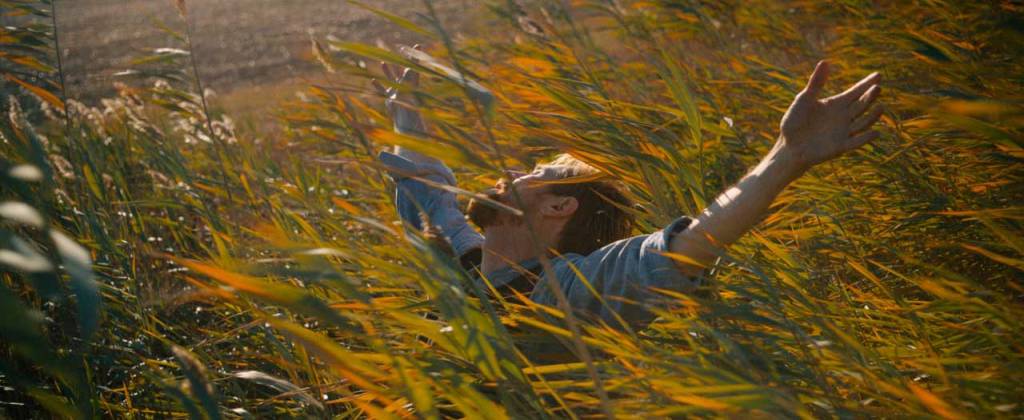
In the memoir, Jo describes a change in Vincent’s work during his last year. She writes, “It was no longer the bouyant, sunny, triumphant work of Arles. There sounded a deeper, sadder tone than the piercing clarion of his symphonies of yellow during the previous year: his palette had become more sober, the harmonies of his pictures had passed into a minor key.” This reminds me of the film At Eternity’s Gate, which uses the “symphonies of yellow” in certain parts, and sometimes, a lot of yellow, like when Vincent is seemingly happy as in the featured image of this article.
I’ll end this with a quote from At Eternity’s Gate describes the journey that Vincent’s work has taken in the period of 100 plus years:
Maybe God made me a painter for people who aren’t born yet.
Vincent Van Gogh (At Eternity’s Gate, 2018)
 the writing nib