Black Is King was controversial from the moment its trailer was released and now even after the film was released on Disney+, there has been a lot of criticism regarding its depiction of Africa and the way Beyonce chooses to celebrate or uplift Africa and African heritage through her art. In this very long essay, I decided to look into some of the issues that have been brought up in discussions about Black Is King, in addition to others that I observed while watching it.
Inauthenticity
Following the release of The Lion King live-action remake in 2019, there was a lot of controversy regarding Beyonce’s album The Lion King: The Gift which was inspired by the film and featured several afrobeats tracks. The controversy was because we, East Africans (referring to Tanzania, Kenya, mainly) found it confusing that Beyonce would use our language (Swahili) in an album inspired by a film that is said to be set in East Africa and not include any East African artists. Instead, the album featured some West African and South African artists like Wizkid from Nigeria and Moonchild from South Africa. You can even see a shot of Mount Kilimanjaro in one of the scenes, the characters’ names are Swahili words; Simba, Rafiki, Kovu, Shenzi, Pumbaa, and even the most famous phrase from the film “hakuna matata” is Swahili. So why weren’t any Swahili-speaking artists considered for the album and the film that followed?
I’ve seen a lot of Beyonce fans who say that she did her research and therefore knew what she was doing, but I don’t think that is true here. We can let go (I think) of The Gift, but they had a whole year to work on Black Is King, a retelling of The Lion King story, and not once did someone say, ‘hey since this story is set in East Africa it’ll be more authentic to include East African artists’? They didn’t do that and it just shows that research wasn’t done. It also perpetuates the idea that African culture is something homogeneous and therefore a story set in East Africa can feature West African and South African artists. Some might argue that afrobeats (a genre that is included in Black Is King) is African, so it doesn’t matter. But it does matter. Afrobeats is a West African music genre. It is quite popular in many African countries and elsewhere, but other Africans are avid listeners of music that is native to their regions. For example, in East Africa, Bongo Flava is the most popular music genre. Therefore the perfect features would’ve been Sauti Sol, Mrisho Mpoto, Diamond Platnumz (Simba himself, that’s what he and his fans call him), Saida Karoli, Jose Chameleon, Vanessa Mdee, Nandy, Navy Kenzo, and others.
Of course, at the end of the day, it is Beyonce’s album so she can do whatever. But in the spirit of educating about Africa, such authenticity should be expected, especially from big global artists like Beyonce.
African religions
Black Is King features elements of some African religions. These include calling on ancestors and the use of headpieces that resemble some ancient Egyptian goddess and others. This has brought up the debate on the respectability of African religions and spirituality, i.e. those that existed before Islam and Christianity were brought by “the Arab and the white man”.
Islam has existed in Africa (Horn of Africa region: present-day Ethiopia, Eritrea) since the 7th century. Christianity has existed in Africa since the first century. That’s a really long time ago, and yes, it is a different version of Christianity from what is practiced in most African countries today, but it’s still Christianity. So we can say that both Islam and Christianity are in fact African religions.
The debate usually involves the word ‘traditional’, and ‘traditional’ refers to something that has existed for a long time. While taking this meaning into account, all forms of spirituality together with Islam and Christianity are traditional African religions, because in reality there is no specific time period after which we get to decide if something is traditional, but the time gap between the 7th century and today is quite big and even bigger if you consider the 1st century and today. We can’t just exclude certain things because they don’t fit the narrative that we are trying to create. The truth is Islam and Christianity are just as African as whatever existed before them.
It is also important to acknowledge that both Islam and Christianity were later spread across Africa through brutal means, i.e. jihads and European colonialism. I have seen tweets claiming that demonizing African religions (with the exclusion of Islam and Christianity) and spirituality is anti-black. Jihads in West Africa were carried out by the Fulani/Fula Muslims. The Fulani are a West African ethnic group of black people. This contradicts the anti-black claims. I’m not sure if the Fulani were forcibly converted, but they did forcibly converted others so these jihads were the result of black people’s actions and so that contradicts the claim that choosing to align with “non-African” religions such as Islam is anti-black.
A good number of Africans today are either Christian or Muslim. These are monotheistic religions and so many who follow them don’t participate in other forms of worship. I have seen Africans getting attacked for speaking against the polytheistic African religions or for stating why they have chosen to stay away from these beliefs. Some of the attacks say that we are brainwashed by “the Arab man and white man”. I agree that most of us became Christian or Muslim as a result of external influence, but saying that we are brainwashed is an insult to us Africans because this assumes that Africans lack agency. Either we know what these other religions can do and we want no part in it, or for some, Christianity and/or Islam are just as African, because as mentioned before, they have existed in the continent for quite some time.
Black royalty and related tropes
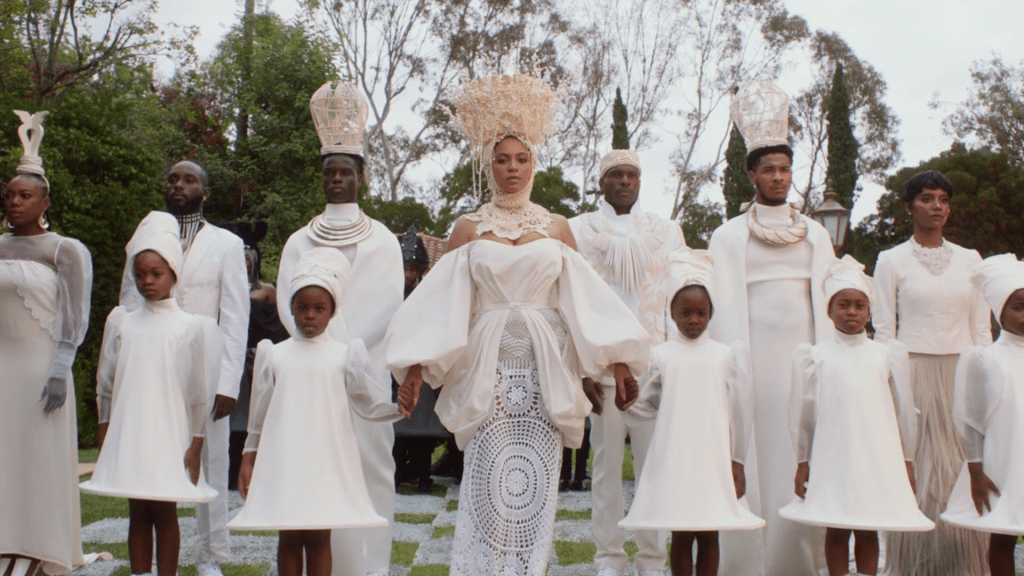
The Lion King is a story about royalty, but to some, it seems like Black Is King is playing into the “we were kings” narrative. This narrative was adopted into the mainstream discourse about European colonialism in Africa. It came during a time when many Africans, especially those outside of Africa, were trying to show that Africa wasn’t a backward isolated ditch where black people lived and therefore European colonialism was not needed. I fully agree with this because if other societies, including European societies, could move past slavery, feudalism, and pointless religious wars, then so could Africa – on its own. However, the African/black royalty narrative has gotten to a point where it is being brought up not only in online debates but also in art, specifically in film. Here we refer to Marvel’s Black Panther and now Black Is King, which are the most popular recent films of such genre. Yes, the Black Panther story had already existed before the film was even made and Black Is King is a retelling of The Lion King, as mentioned before, but what does it tell us about society that these kinds of stories that use the black royalty trope and are centered around black people, are some of the most popular black films? Excluding these two, other popular stories that are centered around black people tend to be stories that exhibit an unbearable amount of black pain, i.e. American slavery (12 Years a Slave, The Birth of a Nation, Django Unchained, Precious), European colonialism in Africa (Tarzan, Mandela: Long Walk to Freedom) and chaos in post-colonial sub-Saharan Africa (Hotel Rwanda, The Last King of Scotland, Blood Diamond, Beasts of No Nation).
Perhaps then there is a reason why African royalty in films is being celebrated. As black people, we are tired of being portrayed as slaves, helpless colonial populations and bloodthirsty armed rebels or corrupt political leaders. The African/black royal trope only serves as a reaction to misconceptions about Africa that had existed before, but it also has its problems. Nigerian author Chinua Achebe said (according to Africa as a Country), “I do not see that it is necessary for any people to prove to another that they built cathedrals or pyramids before they can be entitled to peace and safety. Flowing from that, I do not believe that black people should invent a great fictitious past in order to justify their human existence and dignity today.”
Chinua Achebe is right here. This is exactly what racism does to the oppressed. We end up spending decades and even generations trying to show racists that we too have a great history in order to prove them wrong or gain their respect. But that is not necessary. The great past (and it wasn’t great for every African society, by the way) is gone and for the most part, Africa today is quite messy. It’s pointless to put up photos of skyscrapers in Nairobi and elsewhere as a counter-point to “Africa is poor”. The truth is that many African countries are poor, even in urban areas where some of these skyscrapers and modern architecture exist, and the evidence isn’t hard to find. As an example, Nairobi has the largest urban slum in the continent: Kibera slum. We shouldn’t be focused on royalty, former greatness and carefully selected positive elements of modern Africa. Instead, we need to focus on the truth, i.e. reality. However, this is not to mean that works of art such as Black Panther and Black Is King should not exist.
We need more art that depicts everything; black royalty, black pain, black success (e.g. Dolemite Is My Name). But we also need to be careful about how we consume such works and how we carry the topics brought up by these works into the real world. Black Panther played itself. The film found itself trying to prove to racists that Africa isn’t all poor and desolate. When this particular message was taken into real life we found ourselves calling any African country that seems to be doing well, especially in regard to economic development and political order, Wakanda (e.g. Rwakanda to mean the seemingly organized and efficient Rwanda under President Kagame). This wakandafication tends to erase or simply ignore the pain and poverty that still exists in Africa in addition to the pain caused by these supposedly efficient yet authoritarian governments (e.g. Tanzania). But it could also be that such terms are meant to uplift and encourage other countries to do better. I’m sure it’s no one’s intention to do this, which is why we ought to be careful when bringing fiction into reality.
Black Is King
As a visual work of art, I think Black Is King has exceeded expectations. It is indeed satisfying to watch. I really loved the costume design and the evidently high-quality production. It did also do well in retelling The Lion King as a modern African story.
The issue is what part of Africa needed to be represented in order for it to be authentic. As an East African who grew up in the continent, I feel very disconnected from it. The film reminds me of the need for East Africans to work on telling our own stories. We have a lot to offer, and we already do through Swahili, Bongo Flava, and other cultural elements, yet we are still largely excluded from the ongoing Africa “wave” even though it has shown to continuously exploit our region and its culture (Black Panther, The Lion King, Black Is King).
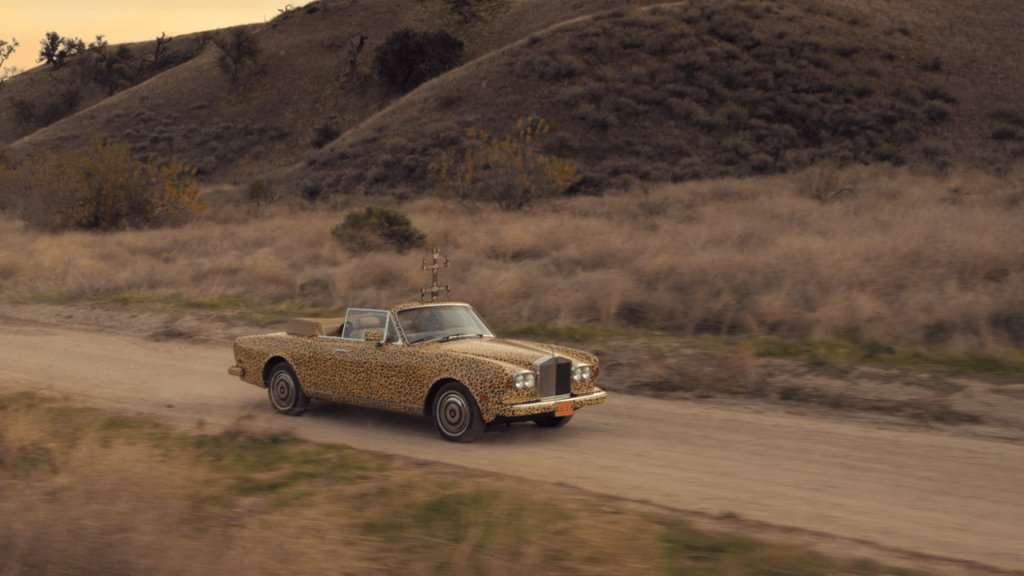
Something interesting that I realized about Black Is King is that it does exactly what Binyavanga Wainaina wrote in his famous piece How to Write About Africa, “Subtitles may include the words… ‘Nile’, ‘Sky’, ‘Sun’…”. In the film, there’s a song titled NILE. Important to point out that the cultures depicted in the film are West and South African, so the mention of the Nile is somewhat irrelevant. Even in The Lion King, the Nile is nowhere to be found in the particular region of East Africa. The shots of Mount Kilimanjaro are proof. Wainaina also writes, “Don’t get bogged down with precise descriptions. Africa is big: fifty countries, 900 million people who are too busy starving and dying and warring and emigrating to read your book.” Sadly this is how it happened with Black Is King. The film wasn’t well-researched meaning it lacked attention to detail in relation to The Lion King story. It combined a few of many West and South African cultures to tell a story of Simba and co. most who have Swahili (East African) names. The saddest part is that no one at Disney thought to make this accessible to Africans (“…too busy starving and dying and warring and emigrating to read your book”). It was announced that it would air on M-net, which is available in nearly all African countries, however, it is important to mention that Mnet is accessible through DStv. As an African, I know that it’s mostly the upper and middle class who can afford DStv. Another thing Wainana writes is, “Wide empty spaces and game are critical – Africa is the Land of Wide Empty Spaces. This can be observed in the film itself (see image below).
To end this very long essay, I’ll leave a quote by Nelson Mandela that I think relates to some of what this essay touches on, because as Wainaina writes, “Always end your book with Nelson Mandela saying something about rainbows or renaissances. Because you care.”
“If you talk to a man in a language he understands, that goes to his head. If you talk to him in his language, that goes to his heart.”
Nelson Mandela


Leave a reply to Jeje Benedict Cancel reply